Like people in other countries, Colombians love to escape the hustle and bustle of the city and, together with their families, look for campsites to rest their minds while enjoying the beauty of nature. If you want the same, but don't know where to camp in Colombia, what to do there or even what to eat, […]
Like people in other countries, Colombians love to escape the hustle and bustle of the city and, together with their families, look for campsites to rest their minds while enjoying the beauty of nature. If you want the same, but don't know where to camp in Colombia, what to do there or even what to eat, Easy Transport prepared this post especially for you.
Note: To enter or camp in Colombia's National Natural Parks such as Tayrona, Chingaza, Nevados and Iguaque, purchasing accident and rescue insurance is mandatory.
Tayrona National Park
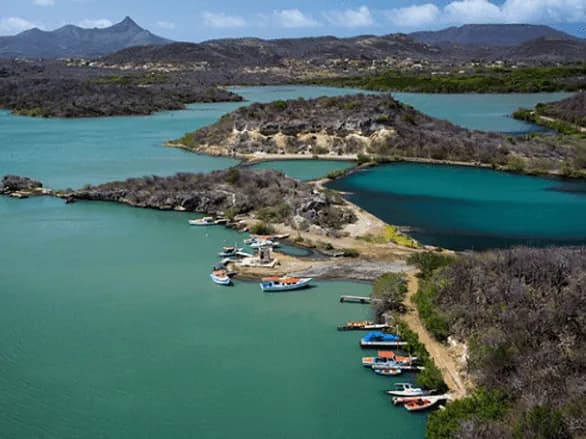
First, let's talk about the park that has a reputation as one of the most beautiful places to camp in Colombia. In addition to being close to the world's highest coastal mountain range, the Sierra Nevada de Santa Marta, Tayrona National Park has most of its biodiversity preserved. And with such beauty, the park becomes a refuge for anyone who wants to escape the noise of the city. And all of this just 1 hour from Santa Marta.
What to do and eat
While in the park, you can swim in the clear waters of some beaches such as Playa Arrecifes, Playa Arenilla and Playa La Piscina. However, as beautiful as they are, some of them are also dangerous. So pay attention to the signs and follow what they say.
Although there are several camping areas in the park, El cabo San Juan is the most famous of them.
Trying new things is part of a traveler's life, so how about setting the tents or trailers aside and sleeping in a hammock? Yes, you read that right. It is considered the best way to sleep well there.
As for food, you can prepare your own, since there is space set aside for that. But if you feel like eating something different, there are good options at the restaurant in the camping area.
What to know before you go
It is not possible to reserve any kind of accommodation or space online. Whoever arrives first gets the best tents and hammocks. Simple as that. Depending on the area where you stay, there may be mosquitoes, so it is best to arrive early and make sure you have a good experience there.
Matarredonda Ecological Park, Cundinamarca
Just 30 minutes from Bogotá, the ecological park, which is full of hikers during the day, offers a great deal of peace to campers at night.
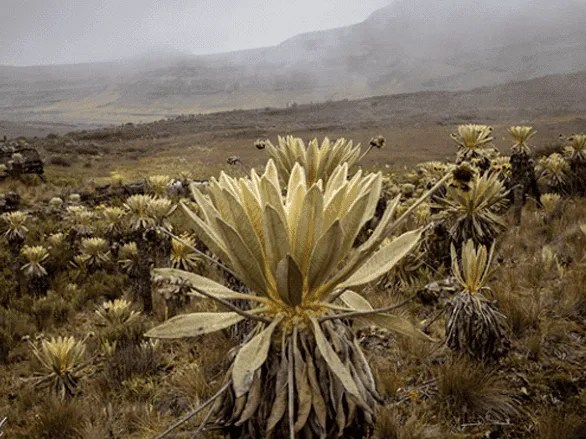
The park is of great importance to the people of the region because, besides its páramo ecosystem, its water benefits several cities in Cundinamarca.
What to do and eat
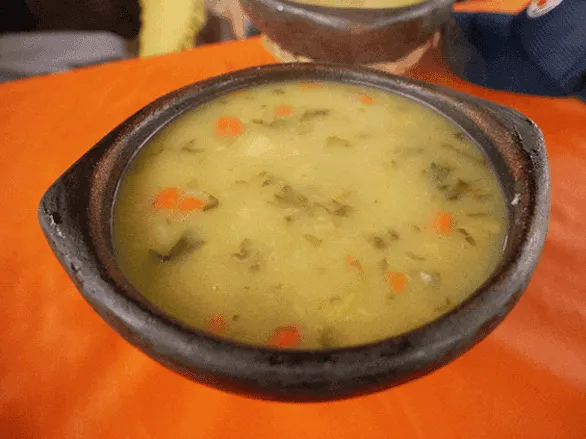
The most common place everyone stops to begin and end the outing is El Márquez del Once. The famous agua de panela with cheese or the Ajiaco give energy to the cyclists and campers who venture through Matarredonda Park. There is also a restaurant at the park entrance that serves lunch at a very friendly price.
Ajiaco, a typical dish from Bogotá, Colombia. Photo: Rikaru, Flickr
Once well fed, you can choose between two trails that, after 1 hour and a half, lead to beautiful natural landscapes such as the Cascada de la Abuela. First, you will reach a smaller waterfall and, after about 2 minutes, the larger one, which is the Cascada de la Abuela. The route is quite easy and very interesting for anyone who has never been to a páramo before.
There are options to go with a guide or private tours, but if you want to venture out on your own, that is no problem at all.
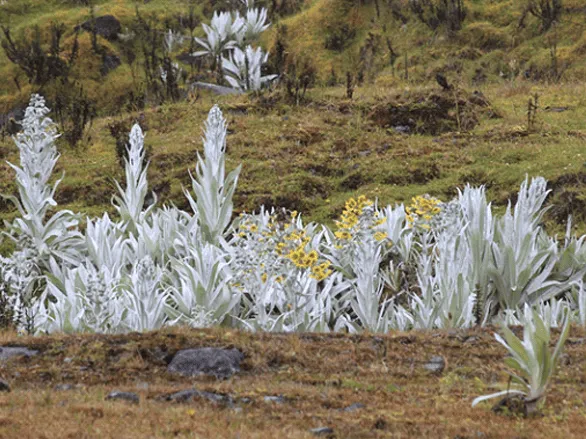
Frailejón, a typical Páramo plant. Photo: Esteban Chancy|Flickr
What to know before you go
Bring warm clothes. Because it is located about 3,500 meters above sea level, the climate is cold, so staying covered and hydrated will help you have the best possible experience there.
Also, even though it is close to Bogotá, not everyone knows it. Asking for information about Matarredonda Ecological Park can be difficult during the trip.
Salento, Quindío
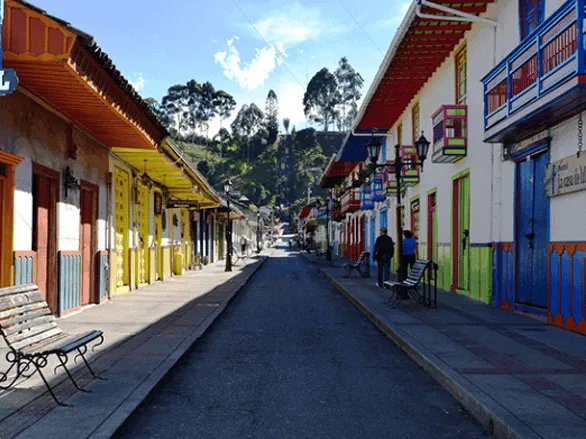
Colonial architecture in Salento, a Colombian town
Salento is known as the coffee town and is part of the area that produces the most coffee in the country. However, Salento is much more than that. With its colonial architecture, full of colors to delight the eyes, it attracts more tourists every day. Stroll through its streets and you will see how lively the atmosphere is. It is neither too hot nor too cold, so you can wander around enjoying the town's unusual beauty. There are bars with unique decor on every corner playing lively music.
What to do and eat
20 minutes from Salento (by car) is the Valle del Cocora In that area there are several restaurants with camping areas. One of them is Palmas de Cocora, where you can camp and then explore the valley. You have to pay COP$4,000 per person at the entrance to the Bosque de Palmas. That is because the area is private and requires permission to enter. Some people end the hike at the viewpoints, but you can go further if you wish. In all, the route is 12 km.
From the Valle del Cocora you can also go to Los Nevados National Park. There are several options inside the park, and some of them are Nevado del Tolima and Paramillo del Quindío.
What to know before you go As in Matarredonda, the Valle del Cocora has unpredictable weather and it can rain at any time. Bring a rain jacket and wear appropriate shoes for the
hike. If you want to go all the way to the end of the circuit in the Bosque de Palmas, bring food. There is no restaurant or place to buy food there.
Unlike the valley, it is recommended that you hire a guide to go to Los Nevados National Park. You also need to be in good physical shape to endure the route.
Tatacoa Desert
Photo: wikimedia commons
Have you ever been to a desert before? Camping in Colombia's second largest desert can be a unique experience. In addition, the place offers one of the most beautiful views of the stars. Starting at 7 p.m., the starry show can be seen both from farms and at an observatory run by astronomer Guillermo García. To camp on the farms, you have to pay a fee to the owners. Likewise, there are other ways to stay in Villa Vieja, the entrance to the desert.
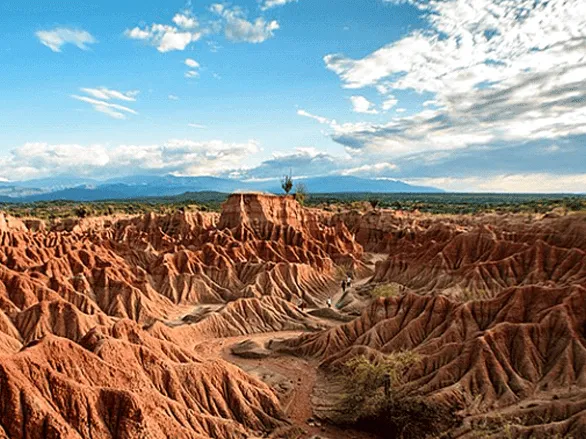
The desert is divided into two parts. One with gray sand and another with red sand, just like in the image below.
Photo: Sara Pons|wikimedia commons
What to do and eat
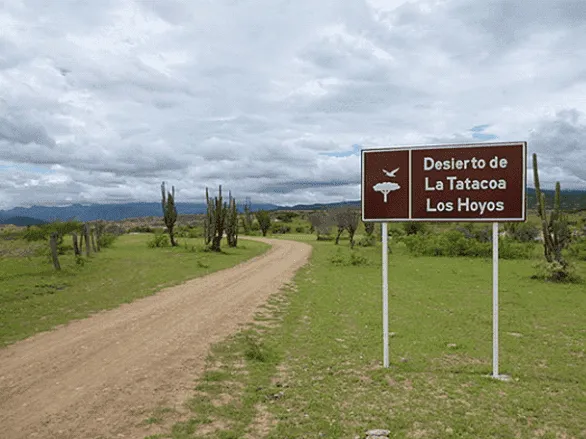
As mentioned before, one of the most sought-after activities is stargazing at night at the observatories. Another option is the circuits you can do during the day, such as the labyrinths of Cuzco, Los Hoyos and the Valle de los Xilópalos. You can also visit a natural pool found in the middle of the desert.
Some typical dishes you can eat at restaurants in the desert are lamb sancocho, roast goat and pepitoria.
What to know before you go
First, the water is not drinkable, so you should go prepared with your own water. Second, we are talking about a desert, so expect nothing less than heat. Third, wear light clothing, but use shoes that cover your feet to protect against some of the desert's natural wildlife.
On the other hand, the images you will see will be unforgettable. A few small "flaws" make up for the rest of the trip.
Chingaza National Natural Park
Camping in Colombia is also about culture. And the PNN Chingaza, located in the eastern range of the Andes, is full of traces of the indigenous peoples who lived there in the past, the Muiscas and the Guayupes.
What to do
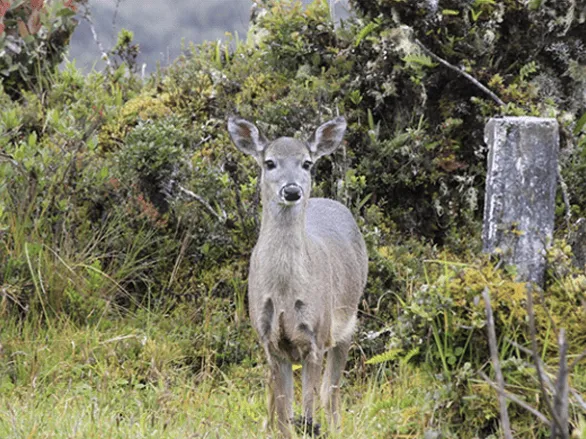
Deer in the Chingaza Moorland
Walking through the park you will see wild animals such as bears and deer. You will also explore fantastic circuits such as the interpretive circuits Cuchillas de Siecha and Laguna de Buitrago.
Since the deer population is high, it will be easy to come across some of them along your way.
What to know before you go
Hiring a tour guide to walk through the inhabited areas of PNN Chingaza is mandatory.
In addition, to visit the park you must make a reservation 3 days in advance. As for food, camping and other activities, we recommend that you contact the park administration, as they are currently reforming their operating policy. Any information given here may become outdated and thus mislead you with old information.
*PNN stands for Parque Nacional Natural (Natural National Park). You will see this abbreviation on signs or in information about parks with this designation.
In summary, that was today's post. And now that you know where to camp in Colombia, what to do there and what to eat, we would like to ask you to tag Easy Transport when you post photos at any of these places we mentioned. We will love to know that we helped you in some way to discover your place in the world. Until the next journey, fellow campers.