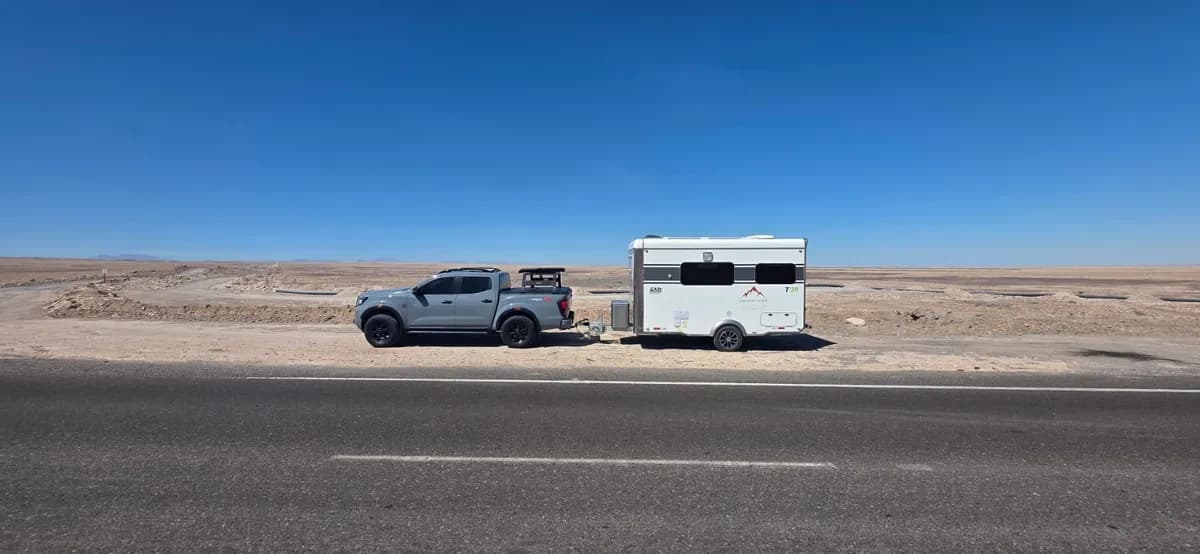
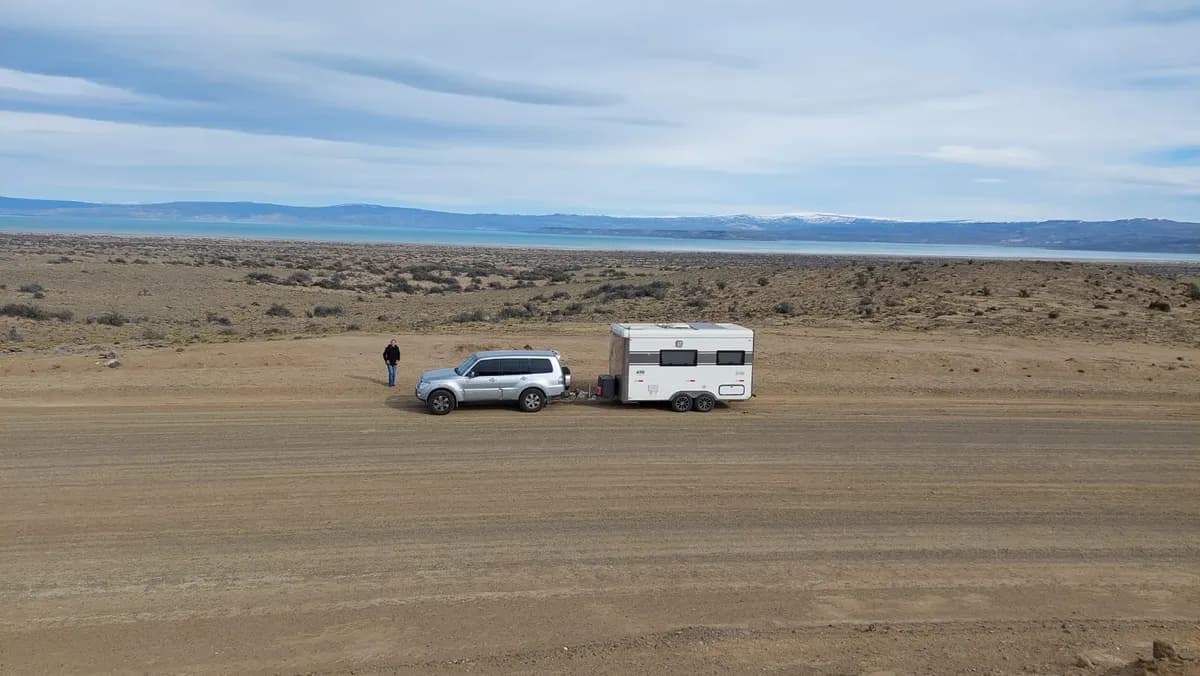
One of the most common questions from our customers is: “What vehicle can I use to tow my trailer?” The answer depends on several factors, such as the weight of the trailer, the vehicle's towing capacity, and the type of terrain you will be covering. If you are just starting your journey with trailers, this post is for you! […]
One of the most common questions from our customers is: “What vehicle can I use to tow my trailer?” The answer depends on several factors, such as the weight of the trailer, the vehicle's towing capacity, and the type of terrain you will be covering. If you are just starting your journey with trailers, this post is for you! Don't have a trailer to call your own yet? Check out the Journey, our trailer model that is the gateway to camping: a lightweight trailer with great value for money.
Understanding Towing Capacity
The towing capacity is the maximum weight a vehicle can safely pull. It is essential to check this information in the owner's manual of your car or the vehicle you are about to buy; the information in the manual is the safest and most accurate in this case. In addition, another important factor to consider is the tow hitch that will be installed, since it also has a maximum capacity, which must be compatible with the weight of the trailer. Remember: the real towing capacity will always be the lower value between the vehicle and the hitch.
Are Pickup Trucks Always the Best Choice for Towing?
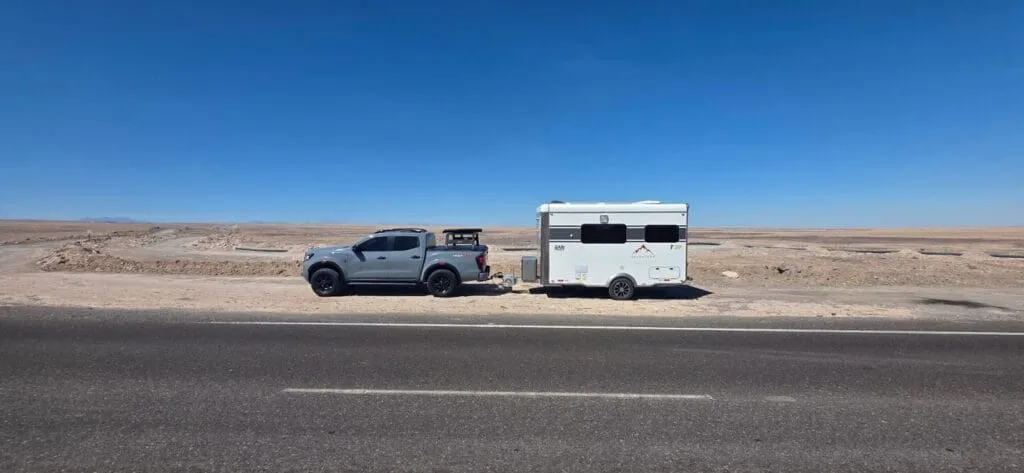
Pickup trucks are, without a doubt, the champions when it comes to towing trailers. They offer:
-
High towing capacity (in many cases, above 3,000 kg)
-
Reinforced structure (body-on-frame chassis)
-
4×4 traction to handle climbs, dirt roads, and rough terrain
-
Powerful engines and high torque
-
Robust rear suspension, ideal for supporting the weight of the trailer
This makes them the favorites of those who travel with larger, loaded trailers or who plan to go beyond the pavement. For those looking for even more robustness, these pickup trucks are excellent options:
-
Chevrolet S10: Towing capacity of up to 3,500 kg.
-
Ford Ranger: Can also tow up to 3,500 kg.
-
Toyota Hilux: Known for its durability, it can tow up to 3,200 kg.
-
Volkswagen Amarok: Towing capacity of up to 3,500 kg.
SUVs as Good Towing Alternatives
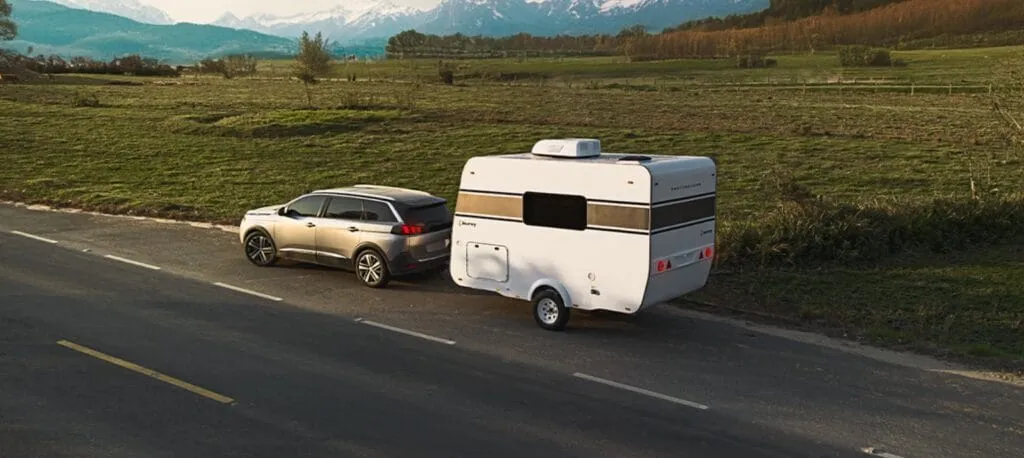
Based on information updated in 2025, we selected some SUVs available in Brazil that stand out for their high towing capacity:
Best Small/Compact SUVs
- Small/compact SUV: Jeep Cherokee (maximum towing capacity of 1,816 kg)
- Luxury compact/small SUV: Land Rover Defender (maximum towing capacity of 3,644 kg)
Best Subcompact SUVs
- Subcompact SUV: Jeep Compass (maximum towing capacity of 1,500 kg)
- Luxury compact SUV: Audi Q3 (maximum towing capacity of 1,500 kg)
Best Midsize SUVs
- Midsize SUV: Dodge Durango (maximum towing capacity of 4,000 kg)
- Luxury midsize SUV: Land Rover Discovery (maximum towing capacity of 3,500 kg)
Best Large SUVs
- Large SUV: Ford Expedition (maximum towing capacity of 3,700 kg)
- Luxury large SUV: Lincoln Navigator (maximum towing capacity of 3,950 kg)
Best Hybrid SUVs
- Hybrid SUV: Toyota Sequoia hybrid (maximum towing capacity of 4,320 kg)
- Large luxury hybrid SUV – Porsche Cayenne Plug-in Hybrid (maximum towing capacity of 3,477 kg)
Best Plug-in Hybrid SUVs
- Plug-in hybrid SUV: Jeep Grand Cherokee PHEV (maximum towing capacity of 2,767 kg)
- Large luxury plug-in hybrid SUV: Porsche Cayenne plug-in hybrid (maximum towing capacity of 3,500 kg)
Best Electric SUVs
-
- Electric SUV: Rivian R1S (maximum towing capacity of 3,500 kg)
Best Towing Features
Now, let's take a look at some of the key features you should watch for when buying a vehicle for towing:
- Electronic trailer sway control: similar to stability control for cars, trailer sway control can detect when a trailer is sliding sideways (perhaps during a sudden evasive maneuver) and counteract it by adjusting the brakes and throttle of the tow vehicle.
- Four- and seven-pin towing connector: you need to connect taillights and brake lights to your trailer, which use a four- or seven-pin wiring harness; having both connectors on a tow vehicle means you are covered for all types of towing
- Integrated trailer brake controller: coordinates the tow vehicle's brake system with the trailer's brake system and lets drivers adjust them to ensure that both systems work together for balanced braking between the two vehicles.
- Tow/haul mode: changes the programming of a tow vehicle's automatic transmission settings, altering when upshifts and downshifts occur to reduce strain on the engine, the transmission, and the brake system.
- Hitch camera: Hitching a trailer is quite simple when you can see both the trailer and the hitch; some new models offer advanced guidance systems that make it much easier to align the hitch with the trailer.
Calculating Your GVWR When Towing
GVWR stands for Gross Vehicle Weight Rating, which in Portuguese can be translated as Peso Bruto Total do Veículo. Please note that you will also need to calculate the total weight you can add to your vehicle, which is basically the difference between the curb weight and the gross vehicle weight. Never exceed the GVWR (gross vehicle weight rating), which includes the curb weight plus the weight of all passengers, cargo, and the tongue weight. The tongue weight is approximately 10% of the total trailer weight and also must not push the vehicle's total weight beyond the GVWR.
Important Tips
-
Check your trailer's weight: Know the total weight (loaded) to make sure the vehicle you choose can tow it safely.
-
Consider the type of terrain: If you plan to travel on dirt or mountain roads, 4×4 vehicles are better suited.
-
Install the right hitch: Make sure the tow hitch is compatible with the weight of the trailer and meets Contran regulations.
-
Consult a specialist: Before you decide, it is advisable to talk with a professional to ensure the best choice.
If you still have questions about which vehicle is ideal for towing your Easy Trailers trailer, get in touch with us! Our team is ready to help you make the best choice for your adventures.
For more information about our trailer models, talk directly with our specialized team by clicking here.
Easy Trailers, Your Place in the World!